

You turn the key and hear a rapid click-click-click, or maybe just a dead silence. You’re losing daylight and money is burning a hole in your pocket.
Your first instinct is to order a new starter. Don’t.
90% of “bad starters” are actually just bad connections, rotten cables, or confused safety switches. If you replace the starter without fixing the root cause, you’ll just have a shiny new starter that still won’t crank.
Here is how to diagnose the problem by ear and fix it fast.
1. What Does It Sound Like?
The noise your tractor makes tells you exactly where to look.
The “Machine Gun” (Rapid Chatter)
- The Sound: Fast, repetitive clicking (Rat-a-tat-tat).
- The Problem: This is Solenoid Chatter. It is almost always a Low Voltage issue, not a bad starter. The solenoid engages, the voltage drops due to a weak battery or bad cable, the spring pushes it back, and the cycle repeats.
- The Fix: Check your battery charge. If it’s above 12.6 Volts, you likely have a bad cable. Jump to the “Voltage Drop Test” below.
The “Single Hard Clunk”
- The Sound: One loud metallic THUD, then silence.
- The Problem: The solenoid is hitting hard, but the motor isn’t spinning. The internal copper contacts are likely burnt, or the motor is seized.
- The Fix: You can try tapping the starter housing with a hammer (lightly) to jar the brushes loose, but you likely need a replacement unit.
The “High-Pitched Whir” (Spinning)
- The Sound: A fast spinning electric motor sound, but the engine doesn’t turn over.
- The Problem: The Bendix (starter drive gear) is kicking out but slipping or failing to engage the flywheel.
- The Fix: The drive gear is toast. Replace the starter.
The “Silence”
- The Sound: Dead silence. No clicks.
- The Problem: Open circuit. The tractor likely thinks it’s in gear or the PTO is running.
- The Fix: Check your Safety Switches.
2. Stop! Check Your Voltage Drop First
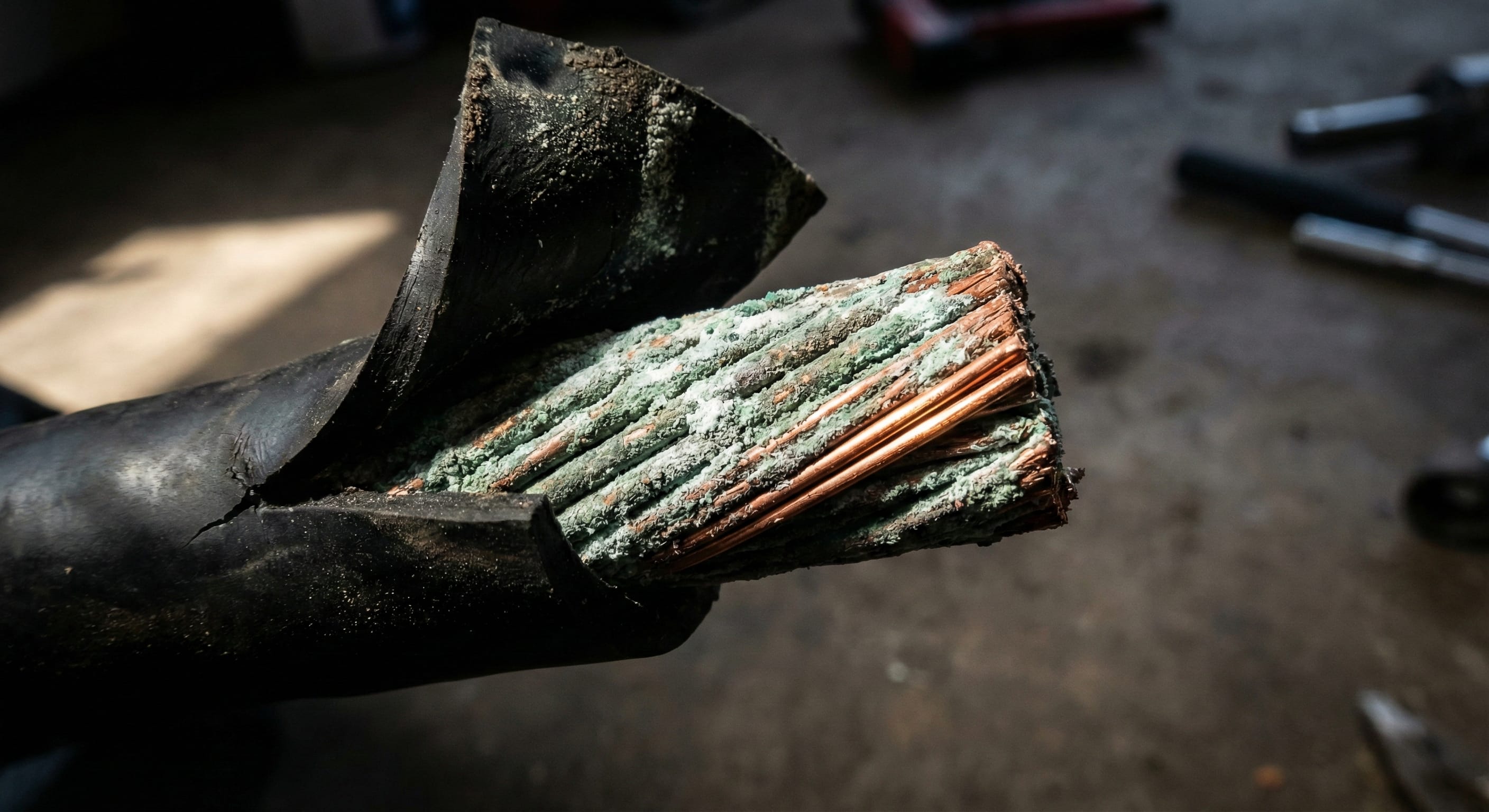
Before you spend a dime, you need to check your cables. Battery cables rot from the inside out. They can look perfect on the outside but be full of green corrosion dust inside the insulation. This causes high resistance.
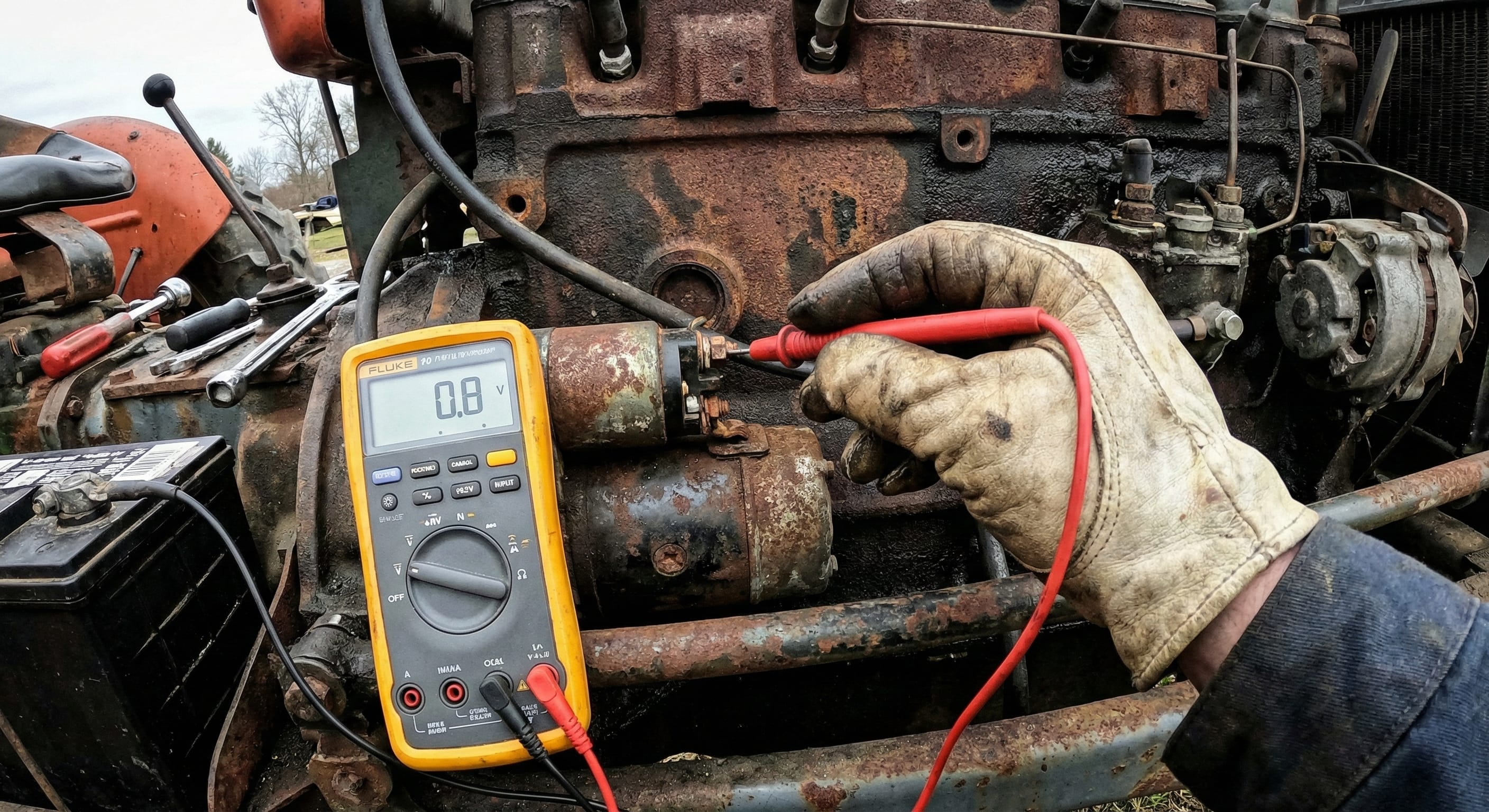
The 2-Minute Voltage Drop Test:
- Set your Multimeter to DC Volts.
- Put the Red probe on the Battery Positive (+) post.
- Put the Black probe on the Starter Solenoid (+) post.
- Crank the engine.
The Fix: If you have high resistance, a new starter won’t help. Replace your leads with Heavy-Duty 2/0 Gauge Battery Cables to restore full amperage.
Heavy Duty Battery Cables
Stop voltage loss with premium, corrosion-resistant 2/0 gauge cables.
3. The “Silent” Killer: Safety Switch Locations
If you have dead silence (no solenoid click), you likely have a safety lockout. These switches get jammed with mud, coated in grease, or vibrate loose.
- PTO Switch: Usually a plunger located behind the PTO engagement lever.
- Neutral Safety (HST/Gear): Often hidden under the seat cushion (seat presence) or on the transmission linkage range selector.
- Clutch Pedal: A plunger switch near the pedal pivot point. Check if a floor mat is preventing the pedal from traveling all the way down.
4. Winter is Coming – Upgrade Your Torque
If your diagnostic proves the starter is actually dead, you have a choice. You can buy another Direct Drive (DD) unit like the one that just failed, or you can upgrade.
Older tractors used Direct Drive starters. They are heavy, slow, and draw massive amperage. In cold weather, they struggle to spin thick oil fast enough to generate cylinder compression heat.
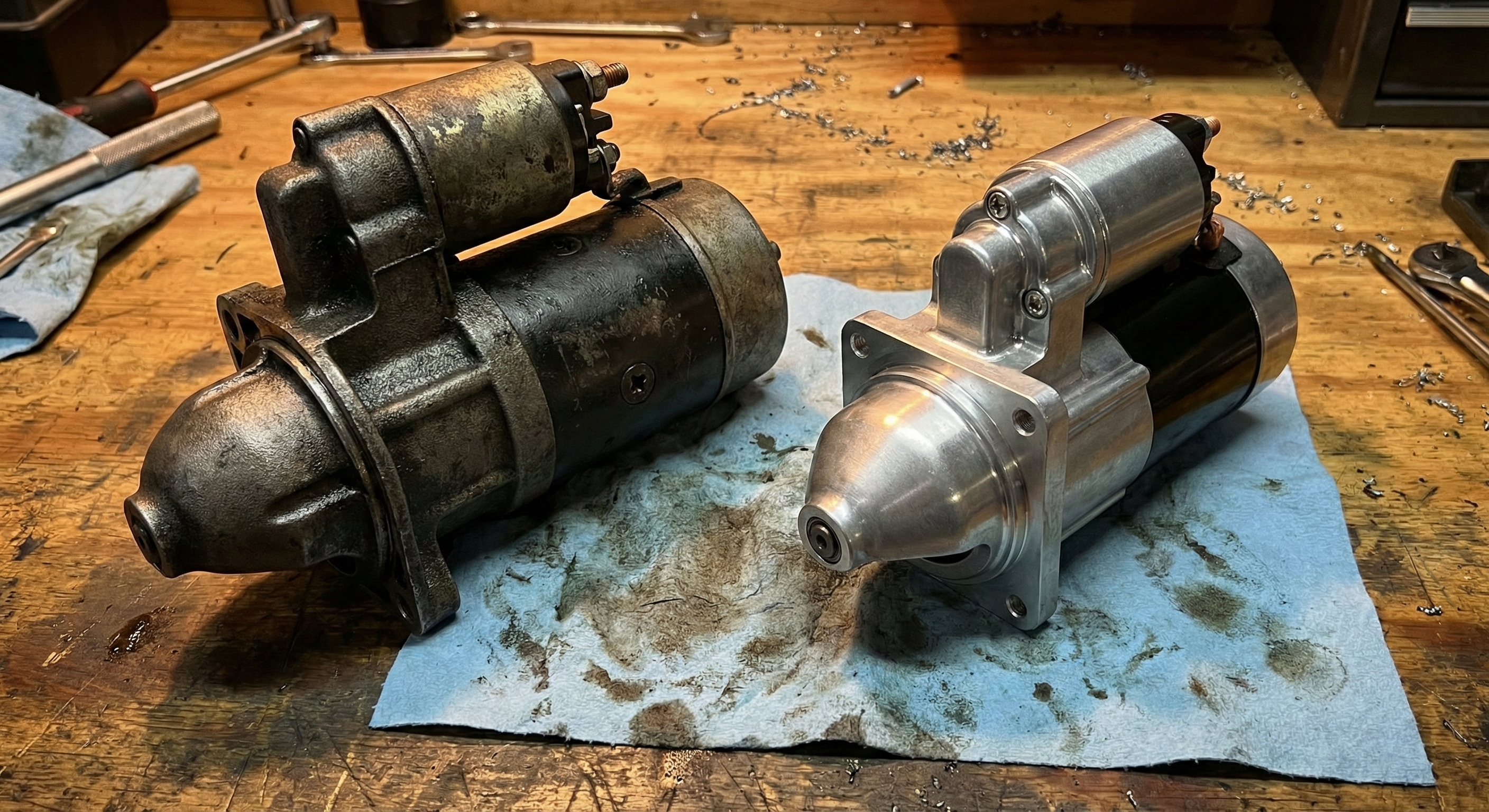
The Solution: Gear Reduction (GR) Starters
We recommend upgrading to a High-Torque Gear Reduction starter.
- Faster Starts: They use an internal gearbox to spin the motor faster with less battery drain.
- Less Strain: They put less load on your battery, which is critical if you have low Cold Cranking Amps (CCA) in winter.
- Lighter Weight: They weigh about 50% less than OEM units but crank twice as hard.
If you have to swap it anyway, put in a unit that fights back against the cold.